





Introduction to Oronsuuts
The famous ger may be the first image that comes to mind when one thinks about traditional Mongolian dwelling. However, oronsuuts is another term that deserves your full attention. This remarkable word captures the essence of an essential aspect of Mongolian culture and way of life. As our planet continues to get more urbanized, learning about oronsuuts helps us better appreciate the cultural significance of these incredible structures. Let’s take a closer look at why this traditional Mongolian home is so important to their culture and how it reflects a deep connection to the land, people, and traditions.
History and Origins of Oronsuuts in Mongolia
Mongolia has a long history of nomadism, and the word oronsuuts reflects that beautifully. Throughout Mongolian history, these traditional dwellings have played an essential role in shaping communities and lifestyles.
The original intent of oronsuuts was to be easily transportable. Because of this trait, herders could relocate their animals as the seasons changed. The design captures the essence of flexibility found in nomadic living through its practicality and efficiency.
Natural materials such as wood and felt are commonly used to construct these homes. Insulation against Mongolia’s severe weather is provided by felt manufactured from sheep’s wool.
According to archaeological evidence, oronsuuts have existed for a very long time, showing how important they have been for people’s livelihoods across generations. Not only do they represent a place to stay, but they also symbolize a sense of belonging and individuality within Mongolian society.
As time went on, oronsuuts began to represent the spirit of the country as a whole. Even today, tales of perseverance and tradition are shared inside these homes, where loved ones gather around a cozy fireplace beneath a starry sky.
Features and Characteristics of Oronsuuts
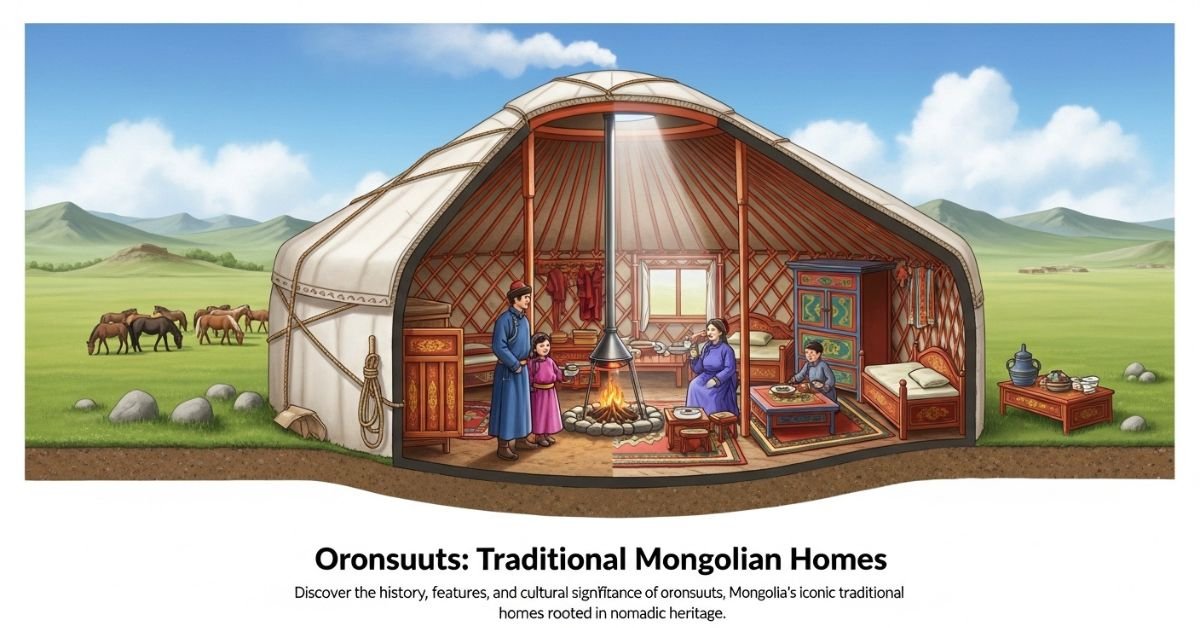
Oronsuuts are one-of-a-kind dwellings that represent the spirit of Mongolian nomadism. In order to facilitate effective heat circulation during severe winters, they are usually round in shape. Beautiful as it is, the design serves a deeply functional purpose as well.
Warmth and insulation are provided by these homes made of wood and felt. Wool from sheep is used to make felt, and it offers great thermal characteristics. By using this all-natural material, oronsuuts maintain a constant inside temperature while still allowing the structure to breathe naturally.
The primary source of heat inside an oronsuuts is a central fireplace. Its inviting warmth unites families and creates a natural gathering point within the home.
Furthermore, the layout encourages communal living by providing specific areas for sleeping and cooking. The use of colorful fabrics and traditional decorations is a common way for residents of oronsuuts to honor their history and share their personal stories.
These structures stand as a living testimony to Mongolia’s profound bond with the natural world, thanks to eco-friendly construction and an environmentally conscious design philosophy.
Modern Adaptations of Oronsuuts
Oronsuuts have evolved over the years to mirror the dynamic nature of modern Mongolian society. Many traditional designs have been modernized to meet contemporary requirements driven by rapid urbanization.
Keeping the signature circular form intact, architects and builders today incorporate contemporary materials into new oronsuuts constructions. Thanks to advancements in insulation technology, modern versions are more energy efficient, allowing occupants to enjoy comfortable temperatures throughout the year.
Interior designs are changing as well. Multipurpose rooms ideal for family gatherings are the result of open floor layouts being introduced across the country.
In an effort to live more sustainably, some families combine contemporary conveniences like solar panels with the classic aesthetic of traditional oronsuuts.
Smaller versions designed to fit compact urban lots preserve the cultural value of oronsuuts while addressing space limitations in cities. These advancements guarantee that the core spirit remains unchanged despite a rapidly evolving environment.
The Role of Oronsuuts in Mongolian Culture and Society
In Mongolian culture, oronsuuts hold immense importance. Reflecting the nomadic way of life in Mongolia, these traditional homes are more than simply places to live — they are symbols of tenacity and flexibility that have endured for centuries.
In rural locations, they serve as gathering places for families and entire communities. The communal character of oronsuuts naturally strengthens bonds among those who share them, where tales are exchanged by the light of crackling fireplaces on chilly winter evenings.
Cultural values are embodied in the structure itself. The use of eco-friendly materials such as wood and felt emphasizes oneness with the natural world. The design facilitates simple construction and disassembly whenever needed, in keeping with the nomadic lifestyle long associated with Mongolian identity.
Naadam is just one of several festivals that features oronsuuts as a prominent centerpiece. Their presence enriches traditional ceremonies and offers a window into Mongolia’s illustrious past through its built heritage.
Tips for Living in an Oronsuuts
Living in an oronsuuts can be a truly one-of-a-kind adventure. Add a personal touch by making the space your own. Classic fabrics and traditional textiles make the interior feel more inviting and unique.
Rooms can be compact, so staying organized is important. Make the most of multi-purpose furniture to remain comfortable and productive within your home throughout the day.
Heating is a must during winter months. Take the time to learn how to properly set up your stove so that warmth is evenly distributed throughout the entire oronsuuts.
Whenever possible, embrace communal living. Strong ties are formed among neighbors and family members by sharing meals and stories together.
Adjust your habits to fit the seasons — spending evenings by the fire in winter or enjoying outdoor walks during warm summer days makes life deeply rewarding.
Conclusion: Embracing the Traditional Mongolian Lifestyle with Oronsuuts
Embracing the ancient Mongolian way of life through oronsuuts offers a fresh perspective on coexisting with the natural world. More than just a place to sleep, these historically significant structures symbolize a community that places a premium on togetherness and resilience.
Living in an oronsuuts connects you more deeply to Mongolia’s nomadic heritage. The design is functional and versatile, catering to those who traverse expansive terrains across changing seasons. A profound reverence for the natural world is nurtured through this meaningful connection.
Choosing to reside in an oronsuuts means actively engaging with both your environment and your cultural roots. Everything that happens within these walls carries meaning — from gathering with loved ones on cold evenings to sharing stories beneath a vast, starlit sky. Embracing this traditional form of housing opens doors to exploring Mongolia’s rich cultural tapestry while offering warmth and comfort for all who call it home.