






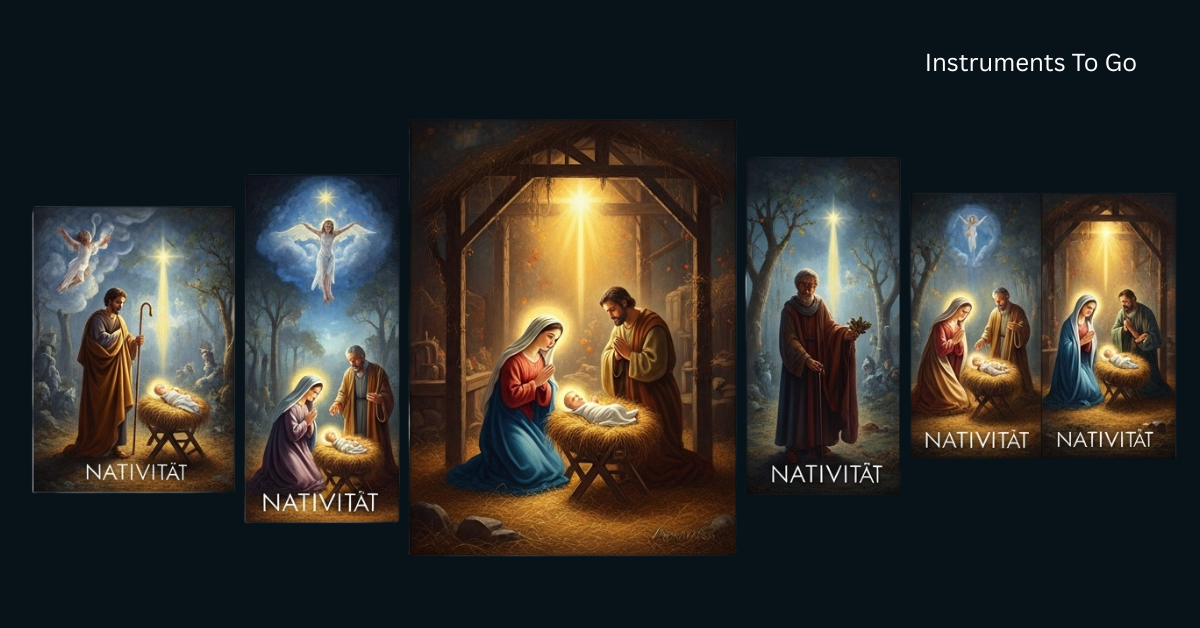
Nativität. It’s a word that makes people think of welcoming gatherings, cherished traditions, and the happiness that comes from being part of a close-knit community. The essence of Nativität is not only a fleeting moment in time, but rather a complete ethic steeped in cultural and historical roots. The more we look into it, the more symbolism we’ll find that is universal across faiths and civilisations.
This investigation will lead us beyond simple explanations and into a profound communion with the common humanity we all share in this joyous season. Come explore the magical realm of Nativität with us, where every detail matters and every festivity has a story to tell.
Origin and history of Nativität
Der Name “Nativität” kommt aus dem Latin Wort “nativitas,” das bedeutet “birth” (Birth). Its etymology reveals the strong association with concepts of genesis and fresh starts.
Observance of Christmas by Christians has long been associated with the Nativity. It was in mediaeval Europe that the Nativity scene first appeared, portraying the birth of Jesus Christ. Artists started making elaborate depictions that caught this holy moment.
The concept of nativity has found expression in many cultures outside of Christianity. A common thread across creation myths is the frequency with which ancient cultures commemorated the changing of the seasons and new beginnings.
Throughout history, Nativität has transformed from a solemn religious emblem into a multi-faceted cultural phenomenon, deeply rooted in art and culture in various communities. Its impact was felt in all facets of society at all times, from plays to music.
Symbolism of Nativität in different cultures and religions
In many religions and civilisations, the Nativity holds deep symbolic meaning. For Christians, it represents the coming of Jesus Christ and everything that he stands for: redemption, hope, and love from on high. One of the most beloved traditions that families share around Christmastime is the nativity scene.
Celebrations like Diwali in Hinduism bring up comparable themes. This celebration echoes the themes of the Nativity stories by marking the victory of good over evil and light over darkness.
Birth is a symbol of rebirth and fresh starts in many traditional cultures. There are many similarities between the adoration shown at Nativität and the rituals surrounding delivery, which both honour the sanctity of life.
Furthermore, in nonreligious settings, Nativität has developed as a sign of harmony among many groups. No matter one’s religious or philosophical leanings, celebrations highlight the need of spreading happiness and generosity.
Symbolism in all its forms highlights the universality of human experience and the need of maintaining cultural norms and values regardless of geographical location.
How Nativität is celebrated in different parts of the world
Every culture has its own special traditions and rituals that are woven into the Nativity festivities. Exuberant parades called “Posadas” bring people together in several Latin American nations to reenact the nativity scenario during exuberant festivities. like they seek refuge in welcoming homes, participants frequently dress like the Holy Family.
As a family, you may look forward to the “Presepe,” an elaborate nativity scene in Italy that features not only Jesus’ birth but also regional life events. Villages are given new life as symbols of faith and history via this artwork.
At the same time, Nativity-themed handcrafted decorations are a popular sight in German Christmas markets. In this setting, celebratory music fills the air as people consume mulled wine.
Genna, a distinctive Ethiopian combination of religious practice and social eating, shows profound spirituality associated with the Nativity narrative and can cause festivities to take on a more solemn tone. Every area pays tribute to this significant occasion in its own unique way.
The significance of Nativität in today’s society
Beyond simple tradition, natalie has a deep and meaningful place in modern culture. In the midst of all the mayhem and uncertainty, it brings about a sense of regeneration and optimism.
The joy of Nativity serves as a reminder to treasure one another as we celebrate this holiday with loved ones. Many of the customs observed during this festival call for contemplation of selflessness, kindness, and giving towards those in need.
Amidst a world that is becoming more and more divided, the ideas explored in Nativität strike a chord. People are motivated to do good deeds and volunteer work by them.
In addition, a lot of artists delve into deeper societal themes using the iconography of Nativität. This sparks discussions about equality, justice, and peace, all of which are issues that require our immediate attention.
Nativität has an ongoing impact on cultural narratives through many artistic mediums, including as music and visual art. There is always space for light and understanding, even in the face of problems.
Controversies surrounding Nativität
Various communities sometimes ignite arguments around Nativität. There may be divergent opinions on its relevance and portrayal based on various interpretations.
The commercialisation of Nativität, according to some, has taken away from its spiritual significance. Modern festivities, according to traditionalists, divert attention away from spirituality and towards materialism.
There is also the controversial topic of cultural appropriation. As Nativität travels over the world, some civilisations embrace it without knowing where it came from. This brings up questions about the sincerity and reverence that should accompany the celebration of this long-standing custom.
Discussions around Nativität are further complicated by political settings. Disputes about who best represents the celebration’s spirit sometimes emerge in communities where religious beliefs and national identity are deeply entwined.
These debates get even more traction on social media. How people see and celebrate Nativität nowadays is a topic of lively but contentious debate on the internet, where differing viewpoints collide.
Conclusion
From one generation to the next, the idea of Nativität has stayed powerful. The significance of Nativität is ingrained in our collective mind due to its deep historical origins and the diverse ways it is commemorated today. Hope, rebirth, and community are some of the ideas that are brought up by it.
Nativität is more than just a religious holiday in today’s culture; it’s a chance to spend quality time with loved ones and contemplate life’s meaning. There is a comforting sense of nostalgia and warmth emitted by the symbols linked to this time. They serve as a poignant reminder of the universal principles that bind people from all walks of life together.
Furthermore, during holiday seasons, conversations concerning Nativität frequently spark arguments around the commercialisation and cultural appropriation of traditional practices. But these debates also show how it’s still relevant to the debate over tradition vs. innovation in today’s world.
The core of Nativität is pausing to welcome delight in the midst of chaos, which is especially important as we move through a world that is getting faster and faster. Not only do festivities have its imprint, but so do works of art, music, literature, and social events that unite people despite their differences in opinion.
An essential aspect of being human is celebrating Nativität, a time when we come together to remember our similarities and differences and to rejoice in the fact that we share both.
Read More: Kibard Explained: Features, Uses, and Benefits You Need to Know