






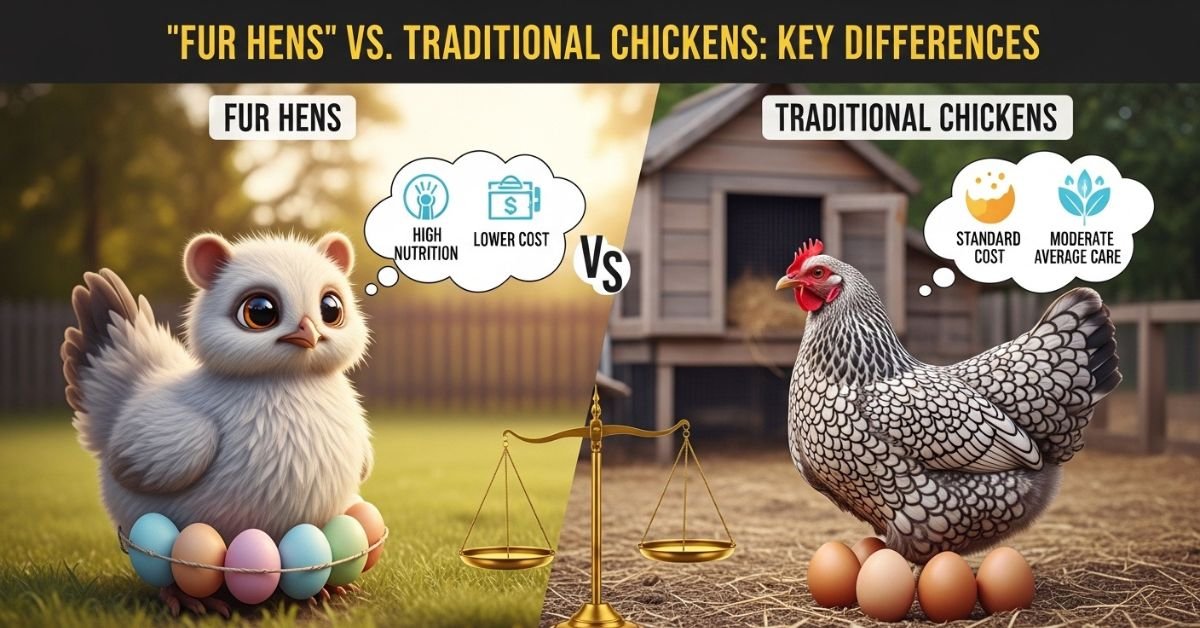
Introduction to Fur Hens and Traditional Chickens
Is the growing popularity of fur chickens anything that interests you? These intriguing birds are all the rage, but how do they compare to regular old chickens? It is essential to know the distinctions between feathery buddies if you are thinking about bringing them to your farm or garden. There are a number of ways in which fur hens excel above the more commonplace chickens. How about we immerse ourselves in the lives of these fascinating animals and find out what sets them apart?
Physical Characteristics and Appearance
Fur hens are easily recognisable by their distinctive plumage. Their fluffy plumage gives them a cuddly appearance, setting them apart from conventional chickens. Their feathery coats appear in a rainbow of shapes and colours, adding to their attractiveness.
One of the things that makes these birds so endearing is that they are usually smaller than the conventional breeds. They seem cute from all angles because to their little stature and rounded bodies. They can survive in cramped quarters thanks to their little stature.
Longer feathers and a more commanding presence are common traits of traditional chickens. They display a wider variety of physical characteristics due to the wide range of sizes they cover, from little heritage breeds to bigger ones.
Although the two kind of chickens have different looks, fur hens put a funny spin on the traditional chicken style. Anyone lucky enough to cross their way will be won over by their charming demeanour.
Egg Production and Quality
Egg production is an important criterion to consider when comparing fur hens to conventional chickens. The egg production of fur chickens could be lower than that of regular hens. But people typically gush about the high quality of the eggs they lay.
The shells and yolks of fur hen eggs are often thicker and more colourful. This is mainly because their food consists of more natural forage than the conventional chicken feed used in industrial farms. Consequently, these eggs are delicious and packed with nutrients.
While conventional hens lay more eggs each clutch, the quality of those eggs can range greatly from one breed to another and from one set of care instructions to another. For culinary reasons or because they have certain nutritional requirements, many people who love eggs look for fur hen variants.
The number of eggs laid by fur chickens may be lower, but they are exquisite all the same. What you hope to gain from your egg experience is the deciding factor.
Nutritional Benefits
When opposed to conventional chickens, fur hens provide a different kind of nourishment. Because of the way they live and eat, their eggs tend to have a higher concentration of omega-3 fatty acids. As a result, frequent consumers may see improvements in their heart health.
Also, you can usually tell a fur hen egg by its darker and more vivid yolk. Because of the abundance of vitamins A, D, and E, this suggests a greater nutritional density. These nutrients are essential for those who are concerned about their health to keep themselves healthy.
The cholesterol content of fur hen flesh may be somewhat lower than that of regular chicken, according to certain research. If you’re watching your cholesterol consumption but still want some protein, this is a great option for you.
Products made from fur hens also have an interesting taste character. There are a lot of people who think it tastes better than the ordinary chicken or egg alternatives on the market.
Cost Comparison
An important consideration when deciding between conventional chickens and fur hens is the budget. Because of their special breeding and care needs, fur chickens could appear to be more expensive than other poultry. Nonetheless, a large number of owners maintain that their unique traits more than justify the initial outlay.
Although the initial investment with traditional hens is usually less, the ongoing feeding expenditures can add up quickly. Particularly if you’re keeping a bigger flock, this may build up. Natural dietary supplements may help fur chickens save money on feed and improve their foraging ability.
Think about things like vet bills that might add up over time. Due of their strong genes, fur hens may be less prone to health problems than other traditional breeds. Therefore, although the cost of purchasing fur chickens may be more initially, the potential savings on maintenance might make up for it in the long run.
Maintenance and Care
Fur hens are different from other chickens in that they need special attention. To keep matting and skin problems at bay, their one-of-a-kind fur coats require frequent care. Their luxurious feathers may be kept in pristine condition with the aid of a delicate brush.
Homelessness is another factor to think about. Proper bedding material is vital for fur chickens since they thrive in clean, dry settings. It’s critical to shield them from severe weather while ensuring they have sufficient ventilation.
There is a difference in the feeding needs. Both guinea fowl and pheasant birds eat grains, but supplementary nutrients are essential for the health of fur hens’ thick coats. General well-being is enhanced by a vitamin-rich, well-balanced diet.
It is also important to remember to get regular checkups. Be vigilant for typical symptoms and make sure your chickens have all the vaccines they need to avoid common poultry illnesses.
Their health and happiness are greatly impacted by their social interactions; these loving animals flourish when they have plenty of opportunities to be with people and other birds.
Pros and Cons of Each Option
Fur chickens are all the rage now because to their charming personalities and unusual looks. In any backyard, their fluffy feathers will be the focal point. But they may not be as resilient to cold weather as regular hens.
More robust and versatile, traditional chickens may thrive in a wide range of habitats. They are available in a larger range of breeds, each with its own unique assortment of egg sizes and colours. But some, owing to their energetic way of life, could need more room.
Fur chickens are known for their placid and submissive demeanour. This makes them wonderful pets for new chicken keepers or families. Conversely, several breeds of traditional chickens are known to exhibit more aggressive tendencies than others.
One last thing to think about is egg production. Many people prefer the distinctive flavour and high quality of fur hen eggs above the amount they lay, even if they lay less eggs overall. The benefits of each choice are tailored to meet individual requirements and tastes.
Conclusion
Think about what you need and want before deciding whether to keep regular chickens or fur hens. Fur chickens are ideal for urban or small-scale homesteads because to their charming look and often submissive temperament, which provides a rare combination of affection and practicality. The nutritional worth of their eggs might vary, but it’s high.
The traditional chicken has a long history of popularity due to its robust nature and large egg output. Most poultry keepers are already familiar with them, and they consistently produce high-quality eggs in a wide range of temperatures.
Space constraints, desired egg production levels, aesthetic preferences, and the sheer delight of caring for animals with unique personalities are all potential deciding considerations. The benefits and drawbacks of each choice are clearly defined. Making the best decision for your living circumstances is as simple as knowing what you want from your experience. Backyard farming and other hobbyist hobbies are sure to be gratifying whether you choose fuzzy appeal or traditional feathery buddies.