





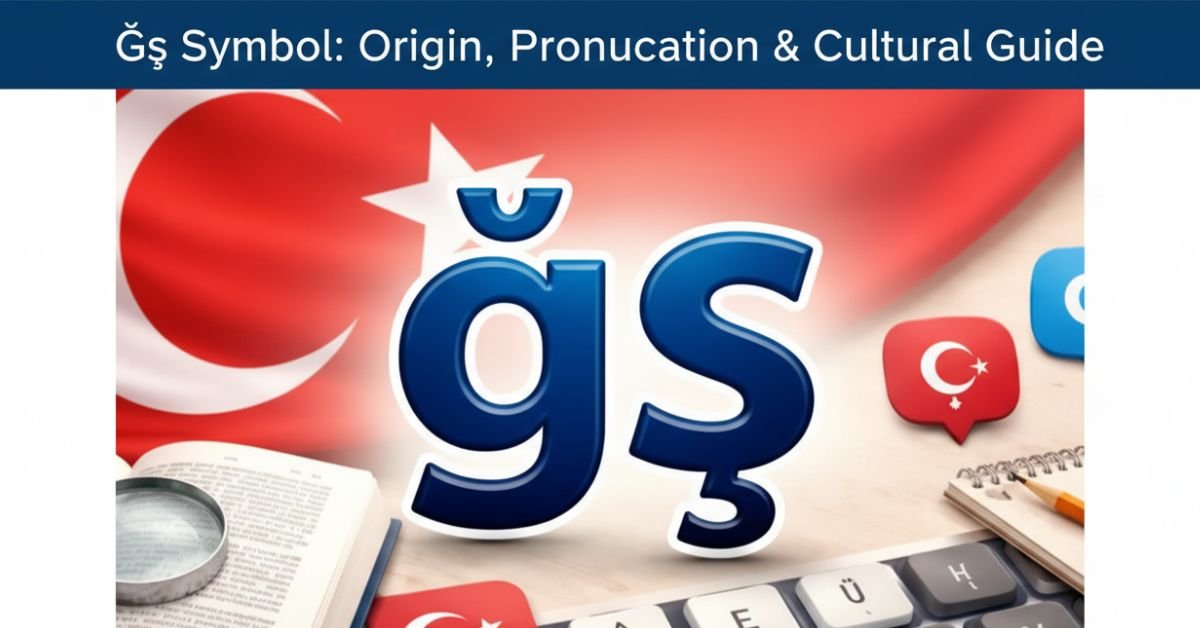
Introduction to the symbol Ğş
We may express ourselves more fully when we tap into the rich lexicon of fascinating symbols and characters. Among these symbols, one stands out: the unusual combination of letters “ğş.” Despite its odd appearance, this character is significant in many languages, especially Turkish, and has a wealthy history. Learning ğş is more than just learning how to pronounce it; it’s about valuing the cultural importance and contemporary uses of the word. Come along on the intriguing adventure of ğş as we investigate its definition, application, and more! Whether you have a passion for languages or are simply interested in linguistic mysteries, you will love this!
Origin and History of Ğş
The Turkish alphabet is where the sign Đş originates from. It came into being during the early 20th century as a result of linguistic reforms that sought to simplify and modernize the Turkish script.
Certain phonetic sounds were not represented before its debut. This gap was closed with the addition of Ğş, which allowed for better pronunciation and communication.
Different spellings of the same characters arose in different languages at different times, although they were never widely used. The distinctive arrangement of letters that make up Đş signifies certain sounds that are vital to Turkish language and culture.
The written forms of Turkish changed alongside the country’s political and cultural developments. In the wake of WWI, as the country attempted to modernize, this emblem became intrinsic to national identity.
Even now, it’s an important part of keeping Turkish as a spoken language real and adding to the larger conversation about language across areas and dialects.
Pronunciation and Usage of Ğş
In most languages, the sound that Ğş represents is distinct, however it can change significantly in pronunciation depending on the context. As an example, in Turkish, the “ğ” is used to lengthen the vowel before it and make its consonant character less harsh. The sound of the “ş” is similar to the English “sh,” which makes for a nice combination.
Words containing Đş frequently incorporate terminology taken from Turkish or languages connected to it. Proper usage of this character is essential for successful meaning conveying.
Accurate use enhances cultural expression and adds clarity to ordinary speech and writing. Anyone wishing to communicate genuinely in environments where these noises are common must master it.
Making sure you pay close attention to detail when writing sentences or pronouncing names with this sign can help your communication resonate with native speakers and show that you appreciate their linguistic intricacies.
Cultural Significance of Ğş
In the places where it is utilized, the symbol Ğş holds great cultural importance. This character stands for specific phonemes that are essential for correct Turkish pronunciation in literature and the language. When used in words, it completely changes their meaning.
A person’s identity and history are frequently represented by the letter in folklore. People who speak languages that include the Đş sound take pleasure in their language heritage when they use this character. It is a poignant reminder of the diverse range of civilizations that are deeply connected to these languages.
In addition, Đş is often used by poets and painters to create emotional resonance in their works. Visual art is also inspired by its flowing form, which effortlessly bridges the gap between language and creativity.
The importance of these symbols in protecting unique cultural identities in the face of increasing homogeneity is growing as the boundaries between countries become increasingly porous due to globalization. Every time someone uses the letter Ğş, they are honoring a whole heritage that is interwoven into the tapestry of history, not just a single letter.
Examples of Ğş in Different Languages
The sign Ğş demonstrates its adaptability since it appears in several languages. For example, in the Turkish words “dağ” meaning “mountain” and “yağ” meaning “oil,” it stands for a gentle “g” sound. This distinct way of pronouncing the word adds depth to the phonetic fabric of the language.
You could also see Đş in some Azerbaijani regional dialects. Its meaning is comparable to that in Turkish, enriching regional phrases.
It is worth noting that this character’s usage extends beyond these two languages. It is also used in several Kurdish dialects. Here, it is crucial in determining both pronunciation and meaning.
Although Đş is not well-known on a worldwide scale, it shows how characters may influence culturally specific language identities. The occurrence of this word in many different languages gives us a sense of the interconnectedness and uniqueness of language.
Modern Applications of Ğş
The Đş sign is now used in many contemporary contexts, especially in the realm of digital communication. In several languages, it stands in for unusual sounds that no one else uses. It is crucial for the appropriate transcription and representation of certain language parts because of this.
The character finds widespread application in computer programming and typeface design. To make sure their program works with multiple languages, developers utilize Ğş, which improves the user experience in different parts of the world.
Many social media sites have also started using Đş. By including this character into their usernames or posts, users may express themselves more creatively and reach a wider audience.
In addition, Đş can be useful in educational tools for teaching linguistic subtleties. This character is used by language applications to help learners understand pronunciation better.
Graphic designers incorporate it imaginatively into logos or branding strategies, highlighting ethnic diversity and depth, and its influence goes beyond language.
Conclusion
In the rich fabric of language and culture, the sign Ğş occupies a distinct position. Its beginnings indicate a long and eventful history, demonstrating how letters may change to fit different phonetics and dialects. To communicate effectively, particularly in languages that use this character, one must know how to pronounce it.
From a cultural perspective, Ğş is more than just a letter; it stands for many speakers’ identity and tradition. Its varied applications in various languages serve as a remarkable illustration of the power of a single sign to unite people of diverse backgrounds and languages.
The use of Ğş has expanded into technology and digital communication in contemporary contexts. Characters such as Đş serve as a reminder of the significance of maintaining linguistic distinctiveness in the face of extensive English influence, especially as our world is being shaped by globalization.
It becomes evident when we go into these aspects of ğş together that this straightforward combination has significant consequences for the perception of language and comprehension of culture. Including these symbols in our discussions helps us understand and connect with people from all walks of life all around the world.