






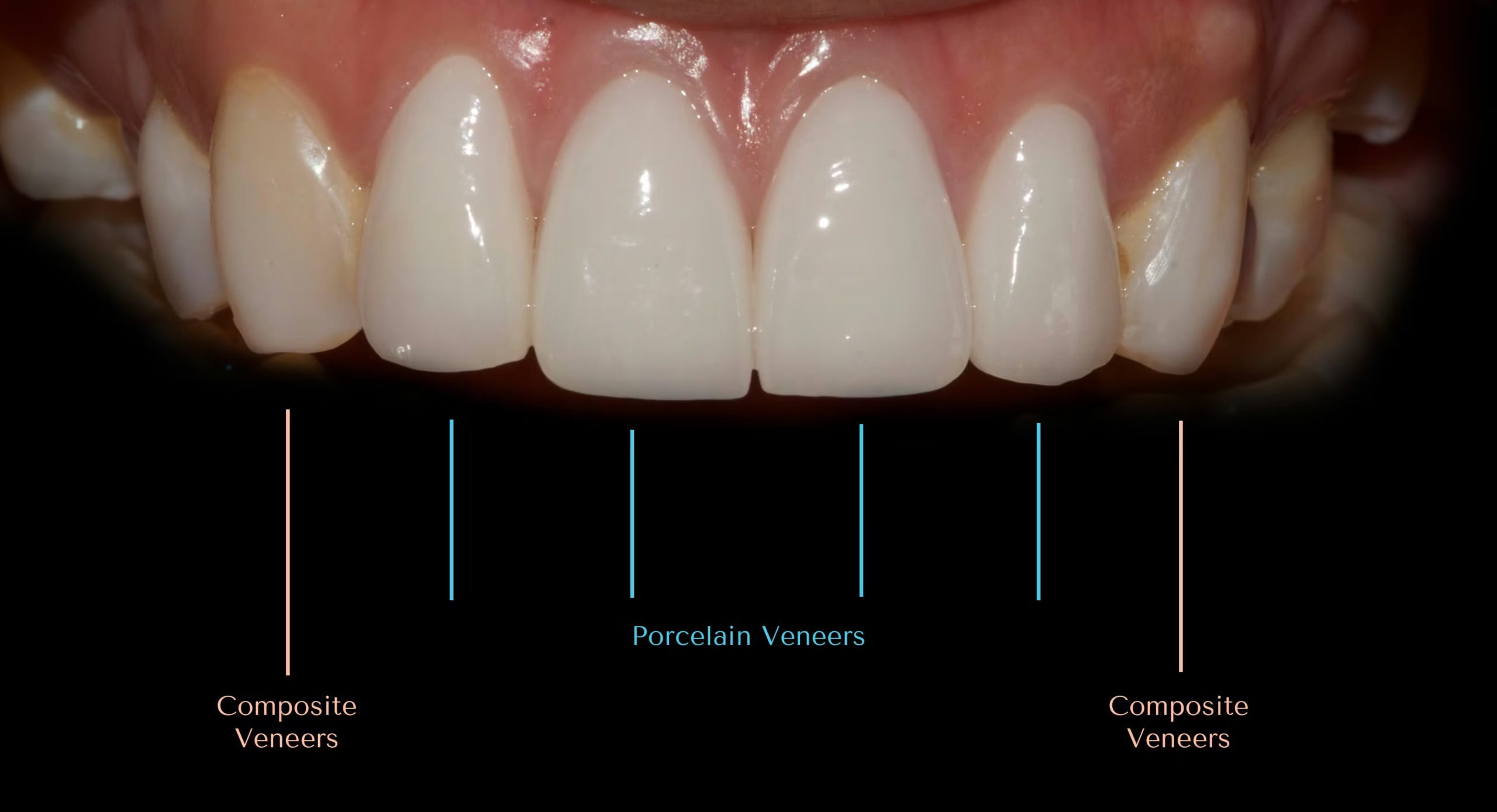
When it comes to improving your smile, dental veneers are one of the most popular cosmetic treatments available today. Whether you want to fix stained teeth, chipped edges, small gaps, or uneven shapes, veneers can deliver a dramatic smile makeover in a relatively short time. However, one important question many patients ask is: Porcelain veneer vs composite veneer: which is better?
Both options can transform your appearance, but they differ in terms of durability, cost, appearance, procedure time, and maintenance. In this detailed guide, we will compare porcelain and composite veneers in depth so you can make an informed decision for your smile. If you are considering porcelain veneers for teeth, this article will help you understand whether they are the right choice for you.
What Are Dental Veneers?
Dental veneers are thin shells that are bonded to the front surface of teeth to improve their appearance. They are custom-made to match the shape, size, and color of your natural teeth.
Veneers are commonly used to correct:
- Discolored or stained teeth
- Chipped or cracked teeth
- Gaps between teeth
- Mild misalignment
- Uneven or worn-down teeth
There are two main types of veneers:
- Porcelain veneers
- Composite resin veneers
Let’s explore each option in detail.
What Are Porcelain Veneers?
Porcelain veneers are thin ceramic shells custom-crafted in a dental laboratory. They are bonded to the front surface of teeth after a small amount of enamel is removed.
Many patients prefer porcelain veneers for teeth because they closely mimic the natural translucency and shine of real enamel.
Key Features of Porcelain Veneers
- Made from high-quality dental ceramic
- Highly stain-resistant
- Long-lasting (10–15 years or more)
- Custom-designed for each tooth
- Require multiple dental visits
Porcelain veneers are considered a premium cosmetic dental solution due to their durability and realistic appearance.
What Are Composite Veneers?
Composite veneers are made from tooth-colored resin material that is applied directly to the tooth and shaped by the dentist. Unlike porcelain veneers, composite veneers are typically completed in a single visit.
Key Features of Composite Veneers
- Made from composite resin
- More affordable than porcelain
- Completed in one appointment
- Easier to repair
- Less durable than porcelain
Composite veneers are often chosen by patients looking for a cost-effective and minimally invasive cosmetic solution.
Porcelain Veneer vs Composite Veneer: Appearance
Appearance is one of the biggest factors in choosing veneers.
Porcelain Veneers
Porcelain reflects light similarly to natural enamel. This gives them a lifelike, translucent appearance that is difficult to distinguish from real teeth. Because they are custom-made in a lab, the color and shape can be precisely matched to your smile.
Patients seeking a flawless Hollywood-style smile often prefer porcelain veneers for teeth due to their superior aesthetics.
Composite Veneers
Composite veneers can look very natural, but they may not achieve the same level of translucency and brightness as porcelain. Over time, composite material can become dull or stained.
Winner for appearance: Porcelain veneers
Durability and Longevity
When comparing porcelain veneer vs composite veneer, durability plays a major role.
Porcelain Veneers
- Last 10 to 15 years or more
- Strong and resistant to wear
- Less likely to chip
- Highly stain-resistant
Porcelain is a hard ceramic material that can withstand daily chewing forces better than composite resin.
Composite Veneers
- Typically last 4 to 8 years
- More prone to chipping
- Can stain over time
- May require more frequent touch-ups
Composite veneers are softer and therefore less durable compared to porcelain.
Winner for longevity: Porcelain veneers
Cost Comparison
Cost is often a deciding factor.
Porcelain Veneers
Porcelain veneers are more expensive due to:
- Lab fabrication
- High-quality materials
- Multiple appointments
- Advanced customization
However, their longer lifespan can make them cost-effective over time.
Composite Veneers
Composite veneers are more affordable because:
- No lab work required
- Completed in one visit
- Less material cost
For patients on a budget, composite veneers can be an attractive option.
Winner for affordability: Composite veneers
Procedure Time
Porcelain Veneers Procedure
The process usually involves:
- Consultation and smile design
- Tooth preparation (removing small enamel layer)
- Impressions sent to lab
- Temporary veneers
- Final bonding appointment
This typically requires 2–3 visits.
Composite Veneers Procedure
Composite veneers are usually completed in one visit:
- Minimal tooth preparation
- Resin applied directly to tooth
- Shaped and polished in same appointment
Winner for convenience: Composite veneers
Tooth Preparation
Tooth preparation affects long-term dental health.
Porcelain Veneers
- Requires removal of a thin layer of enamel
- Irreversible procedure
- Permanent commitment
Once enamel is removed, the tooth will always need coverage.
Composite Veneers
- Minimal or no enamel removal
- Sometimes reversible
- More conservative approach
Winner for minimal invasiveness: Composite veneers
Stain Resistance
Porcelain Veneers
Porcelain is highly resistant to stains from:
- Coffee
- Tea
- Red wine
- Smoking
This makes porcelain veneers for teeth ideal for patients concerned about discoloration.
Composite Veneers
Composite resin is more porous and can stain over time, especially with frequent exposure to dark beverages.
Winner for stain resistance: Porcelain veneers
Maintenance and Repairs
Porcelain Veneers
- Difficult to repair if chipped
- Usually must be replaced
- Stronger overall
Composite Veneers
- Easier to repair
- Dentist can add resin to fix chips
- More flexible material
Winner for easy repair: Composite veneers
Natural Feel and Comfort
Both types of veneers feel natural once bonded properly. However, porcelain veneers often feel smoother due to their glazed surface.
Many patients report that porcelain veneers for teeth feel almost identical to natural enamel.
Who Is a Good Candidate for Porcelain Veneers?
You may be a good candidate if:
- You want long-lasting results
- You desire a dramatic smile transformation
- You have healthy gums and teeth
- You want maximum stain resistance
- You are willing to invest in premium treatment
Porcelain veneers are ideal for patients seeking a permanent cosmetic solution.
Who Is a Good Candidate for Composite Veneers?
Composite veneers may be suitable if:
- You want a budget-friendly option
- You prefer a reversible procedure
- You need minor cosmetic corrections
- You want results in one appointment
Composite veneers are often recommended for younger patients or those testing cosmetic changes.
Pros and Cons Summary
Porcelain Veneers
Pros:
- Highly natural appearance
- Long-lasting
- Stain-resistant
- Strong material
Cons:
- Higher cost
- Multiple appointments
- Irreversible
Composite Veneers
Pros:
- Affordable
- Single visit
- Easier to repair
- Less invasive
Cons:
- Less durable
- Prone to staining
- Shorter lifespan
Which Is Better: Porcelain Veneer vs Composite Veneer?
There is no one-size-fits-all answer. The better option depends on your:
- Budget
- Cosmetic goals
- Timeline
- Oral health condition
- Long-term expectations
If you want superior aesthetics, durability, and long-term performance, porcelain veneers for teeth are generally considered the better choice.
If you want a cost-effective and quick solution, composite veneers may be suitable.
Long-Term Value Consideration
While porcelain veneers have a higher upfront cost, their longevity often makes them more economical over time. Replacing composite veneers multiple times may eventually exceed the cost of porcelain veneers.
Patients who prioritize long-term smile investment often choose porcelain.
Final Thoughts
When comparing porcelain veneer vs composite veneer, both options offer unique advantages. Porcelain veneers provide unmatched beauty, durability, and stain resistance. Composite veneers offer affordability, convenience, and minimal invasiveness.
If you are looking for the most natural-looking and long-lasting solution, porcelain veneers for teeth are widely regarded as the superior option in cosmetic dentistry.
READ MORE ON INSTRUMENTSTOGO